
Candidate Biographies (2016)
Candidates for member-at-large and graduate student representative are listed alphabetically by last name. Scroll down the page to view each candidates or click on a candidate’s name to be taken to their biography.
Candidates for Member-at-Large
Cindy Jong, University of Kentucky
Crystal Kalinec-Craig, University of Texas at San Antonio
Shiv Smith Karunakaran, Washington State University
Amanda Miller, Illinois State University
Shari Stockero, Michigan Technological University
Eva Thanheiser, Portland State University
Matt Thomas, Ithaca College
Caroline “Caro” Williams-Pierce, University at Albany, SUNY
Candidates for Graduate Student Representative
Christopher Dubbs, Michigan State University
Nicola Hodkowski, University of Colorado, Denver
James Sheldon, University of Arizona
Candidates for Member-at-Large
Cindy Jong, University of Kentucky
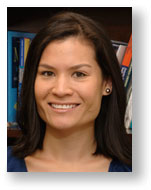 I am an associate professor of Mathematics Education in the STEM Education Department at the University of Kentucky. My research examines K-8 teachers’ identity and conceptions (i.e. attitudes, beliefs, and dispositions) to understand how teachers position themselves in relation to contexts and experiences that might influence their classroom practices. Social justice and equity are central themes underlying this line of inquiry. In addition, I have begun to use the framework of professional noticing to extend conceptions and equity work.
The first PME-NA conference I attended was in Reno in 2011 where I was immediately impressed and engaged by the high quality research. Since then, I have participated annually by reviewing, presenting, and co-facilitating working groups. This year I served as a Strand Leader for the Theory and Research Methods strand and assisted in verifying English translations (from Spanish) for the 2016 proceedings. As a fellow from the 1st STaR cohort, one of my goals as a member of the PME-NA Steering Committee is to increase opportunities for early career scholars. I also think it is critical to encourage the participation of international members and broaden PME-NA’s research impact.
Crystal Kalinec-Craig, University of Texas at San Antonio
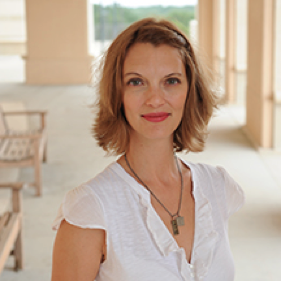 I am an assistant professor of Curriculum and Instruction at the University of Texas at San Antonio. My research examines the diverse mathematical resources of children and teachers, namely the cultural and linguistic resources not typically represented in traditional mathematics classrooms. I also leverage Complex Instruction to help pre-service and in-service teachers structure and implement groupworthy tasks that afford children multiple opportunities to demonstrate their knowledge of mathematics. Finally, I examine how mathematics teachers can utilize community resources such as interactive children’s museums in order to incorporate art, music, and science contexts in their mathematics instruction.
As a member of PME-NA since 2010, I have served as a conference attendee, presented my work in both poster and report formats, reviewed multiple proposals, and currently serve as a member of the local organizing committee for the PME-NA 38 in Tucson, Arizona. I hold various leadership positions such as faculty senator for my department and as co-editor for a small section in a national teacher practitioner journal. If I were to serve as a member of the steering committee, I would work to increase the visibility of diverse ideas and perspectives that will hopefully serve to strengthen our collective work as an organization.
Shiv Smith Karunakaran, Washington State University
 I am currently an Assistant Professor of Mathematics Education in the Department of Mathematics and Statistics at Washington State University. I earned my Ph.D. in Curriculum and Instruction from The Pennsylvania State University. My research broadly concerns the study of the teaching and learning of mathematics at the undergraduate and graduate levels. Specifically, I examine the psychology of and the strategies used by undergraduate and graduate students of mathematics during the proving process. I am currently leading a project that is focused on scrutinizing the learning outcomes for students within the context of an undergraduate “Introduction to Proof” course that is being taught from an inquiry-oriented perspective.
I have regularly attended the annual PME-NA meeting since 2009, when I was a graduate student at Pennsylvania State University. I have presented both papers and posters at the PME and PME-NA annual conferences. I have also routinely served as a conference proposal reviewer for the annual meetings. I also have experience in conference planning, as I served as a member of the organizing/steering committee for the Second International Conference on Argument-Based Inquiry that was held over this past summer in the state of Washington. I look forward to continuing my service to PME-NA as a member of the steering committee. If given the opportunity, I am excited to help the organization continue its charge of promoting and sharing innovative and excellent research in the psychology of mathematics education. I would also love the opportunity to work towards bringing the annual conference of PME-NA to the beautiful Pacific Northwest.
Amanda Miller, Illinois State University
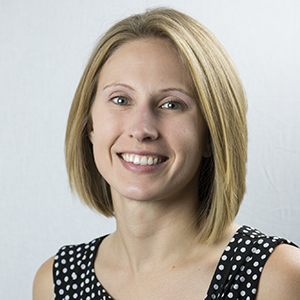 I am an Assistant Professor of Middle School Mathematics Education in the Mathematics Department at Illinois State University. My research focuses on how to support and promote children’s thinking and learning about geometric measurement concepts in the domains of length, area, volume, and angle; how children’s drawing development provides a lens into their development of geometric and spatial thinking; and how teachers’ instructional practices are affected by professional development that utilizes hypothetical learning trajectories as tools for teachers.
I have attended, presented, and/or reviewed for the PMENA since 2010. I recently completed my term as Assistant Editor of the Journal for Research in Mathematics Education and am actively seeking another way to serve our field. If elected, I would work to accomplish three things. First, I would support research on how informal educational settings affect students’ mathematical thinking and learning. The learning environment plays a critical role. Extending research to incorporate informal contexts, such as after school or summer programs may provide us with new insights. Second, I would promote more expert-novice researcher interactions. Although other organizations have provided their members with similar opportunities, PMENA’s unique mission focused on interdisciplinary research can produce a unique membership. It is important our expert and novice interdisciplinary researchers have more opportunities to interact. We can encourage more early career researchers to become actively involved in a working group as well as encourage established researchers to (continue to) attend the conference. Finally, I would investigate the feasibly of hosting PMENA at Illinois State University again. My colleagues and I are interested in hosting a future conference, but this is a daunting task that we do not take lightly.
Shari Stockero, Michigan Technological University
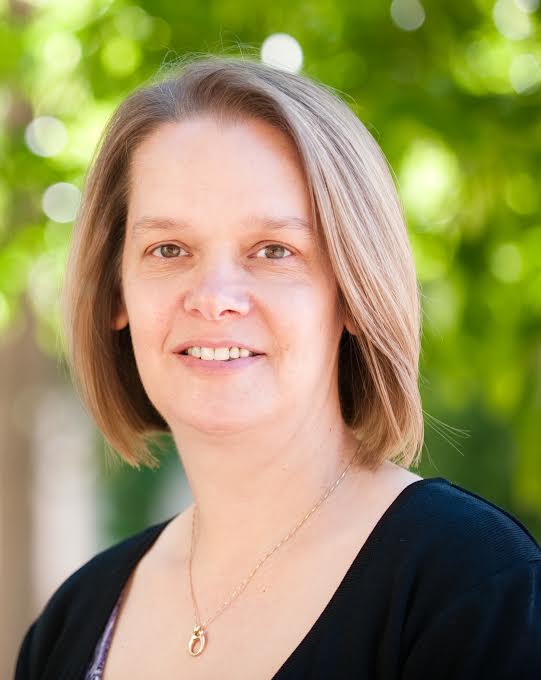 I am an Associate Professor of Mathematics Education and the Director of Teacher Education at Michigan Technological University, and am completing my term as the inaugural president of the Michigan Association of Mathematics Teacher Educators. My research focuses on productively using student thinking in-the-moment, as it emerges during a lesson. My recent work has focused on conceptualizing high-potential instances of student thinking that can be capitalized on to support students’ mathematical learning, as well as productive teacher responses to such instances. I have worked with preservice and practicing teachers to develop their ability to notice these high-potential instances, both through the use of video and in real time during their instruction.
My involvement with PME-NA includes presenting at ten conferences, co-organizing three working groups focused on classroom discourse and teacher noticing, reviewing proposals, and serving on the 2012 conference committee. I believe PME-NA serves an important role in the mathematics education community as a venue for disseminating research, developing collaborations, and helping new researchers become inducted into the field. I would like to see the organization continue to explore ways to make the conference more accessible to diverse researchers and to support graduate students and early career researchers.
Eva Thanheiser, Portland State University
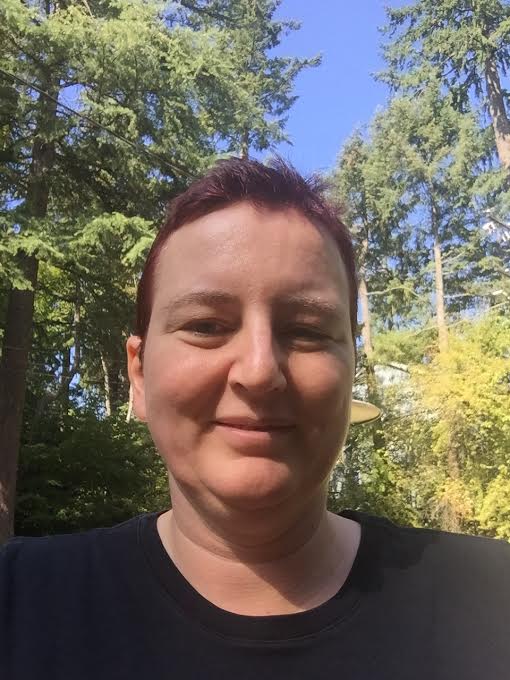 I am an Associate Professor of Mathematics Education at Portland State University. My research focuses on elementary teacher knowledge, learning, and motivation to engage. One of my current research interests focuses on understanding how prospective elementary mathematics teachers approach their university mathematics content courses. What is their image of mathematics when entering our courses? What motivates them to engage with activities in our courses? Another one of my research interests is on understanding what motivates in-service elementary teachers to engage in professional development activities.
I attended my first PME-NA conference when it was jointly held with PME in Cuernavaca, Morelos, México, in 1999. I have been actively engaged with PME-NA since. I have attended the conference regularly; I have presented posters, brief research reports, and research reports. I ran a working group over multiple years, which resulted in the publication of a special issue of the Mathematics Enthusiast focusing on prospective teachers’ content knowledge.
I am excited about the opportunity to serve on the PME-NA steering committee. In particular I am interested in exploring the possibility of bringing PME-NA to Oregon.
Matt Thomas, Ithaca College
 I am an Assistant Professor in the Department of Mathematics at Ithaca College. Broadly, my research focuses on the teaching and learning of undergraduate mathematics, particularly Calculus. I investigate how to measure conceptual understanding of calculus and the effects of different pedagogical techniques on student learning. A recent project addresses how video lessons influence student understanding. I am also studying the effects of virtual manipulatives on understanding of Taylor series convergence.
I have participated in PME-NA since 2014, and am a member of the local organizing committee for the upcoming conference in Tucson, AZ, in which I have helped to edit the conference proceedings. As a member of the Steering Committee, I would aim to continue the great work done by the organization. PME-NA serves an important role in the mathematics education community, bridging gaps between researchers focused on students of different ages, different areas of mathematics, and using different research methodologies. My background includes working with preservice and inservice teachers as well as K-12 students and undergraduates. PME-NA is an ideal venue to see how work with all these groups overlap. I am excited at the prospect of supporting this mission and help researchers share their work.
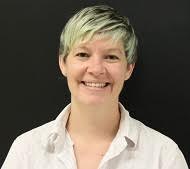
Caroline “Caro” Williams-Pierce, University at Albany, SUNY
Candidates for Graduate Student Representative
Christopher Dubbs, Michigan State University
 I am a doctoral student in the Program in Mathematics Education at Michigan State University. My research interests center on issues of inequity in mathematics education.
PME-NA 37 was my first experience with PME-NA. As a graduate student, I was able to find a network of like-minded scholars (including both graduate students and faculty) and to participate in the graduate networking events (e.g., graduate student social and lunch with scholars). Since the connections that I made at PME-NA 37 (a group of scholars self-named Queer Intersections and interested in queer intersectionality, gender, and issues of power) have been central in developing my own research program, I am particularly interested in supporting PME-NA to address the unique needs of the graduate students in the PME-NA community. I am excited about the opportunity to serve on the PME-NA steering committee to further the goals of the organization while simultaneously developing additional opportunities to support those graduate students currently within our community and to attract graduate students not yet part of our community. See you at PME-NA 38!
Nicola Hodkowski, University of Colorado, Denver
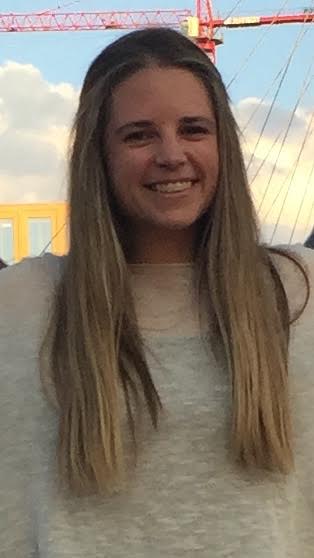 I am a mathematics education doctoral candidate in the School of Education and Human Development at the University of Colorado, Denver. My research focus is the elementary school mathematics teachers’ process of change in thinking and practice as they shift toward a more conceptual emphasis. I teach mathematics courses for pre-service and inservice teachers. Prior to my doctoral studies I was a classroom teacher for 8 years.
This fall I am participating in my third PME-NA conference. I have authored, co-authored, and presented research reports and served as a reviewer of conference submissions. I have been amazed at the professional learning community PME-NA provides to people at all levels of experience in mathematics education. I look forward to representing the interests of graduate students in the organization. I will encourage discussion among steering committee members on how we might increase the participation at the annual conference of top researchers. This is an issue that is of particular interest to doctoral students and junior faculty members.

I’m a second year doctoral student in the Math and Science focus in the Teaching and Teacher Education Program at the University of Arizona. My research focuses on using Universal Design for Learning and Complex Instruction to teach mathematics to students with disabilities; I draw upon queer theory, disability studies, and curriculum studies in these inquiries.
My first PME-NA was in Chicago where I co-hosted a working group on Queer-ing, Trans-forming, and En-gendering Mathematics and Mathematics Education. I met my current academic advisor at that conference, and it ended up changing my entire direction in life. Consequently, PME-NA was (quite honestly) one of the most influential things in my life that I attended in the past three years.
This year I was asked to join the Local Organizing Committee for the 2016 conference in Tucson and had the opportunity to see what goes into on-the-ground planning for a conference of this scope. My primary goal as a Steering Committee member would be to strengthen our relationship with other grassroots, volunteer-run mathematics education organizations, such as TODOS, SIGRME, and AMTE. I am excited about having the opportunity to broaden my involvement in PME-NA by running for this position.